TAKE OFF AREA
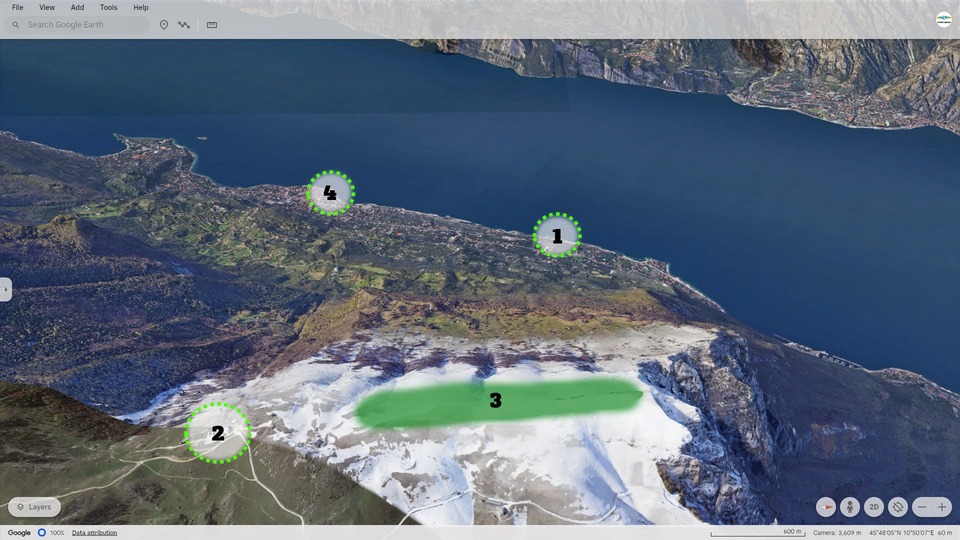
Nr 1 - Is your landing zone at about 90m AMSL.
Nr 2 - Is where you will arrive on top of the mountain with the gondola ski lift.
Nr 3 - Take-off area, it is a large meadow at 1750 AMSL.
Nr 4 - Malcesine
With South winds on the lake, you will be taking off towards WSW direction on the top. This is quite straightforward, after take-off you want to hug the mountain to head towards South parallel to the terrain, just before you reach the cables of Gondola that brought you up. Then follow those cables to the town Malcesine. This route tends to be the most efficient to get to the South box.
THE BOX
This is the area where we practice.
Defining factor for the box is wind and altitude.
Think of it like this - what if I throw my reserve right now, where would I end up landing?
The box’s dimensions change before every flight and during every flight. As the wind speeds increase, you will have to go more upwind to make sure you are in a good box. If the wind speeds are lower, then flying more direct towards landing zone makes more sense as there will be less drift while you’re doing your practice inside the box.
Lake Garda is known for its winds. They regularly change directions. In the morning we will have North wind on most days, that will switch to South Wind before afternoon. This valley flow then will increase in strength just to slow down in late afternoon and repeat the process.
Wind speed and direction can change with altitude as well, you might have North wind up high and South wind as you getting lower. Box will be adjusted throughout the run. Don’t worry, your instructor will assist and correct the box as needed.
SOUTH BOX
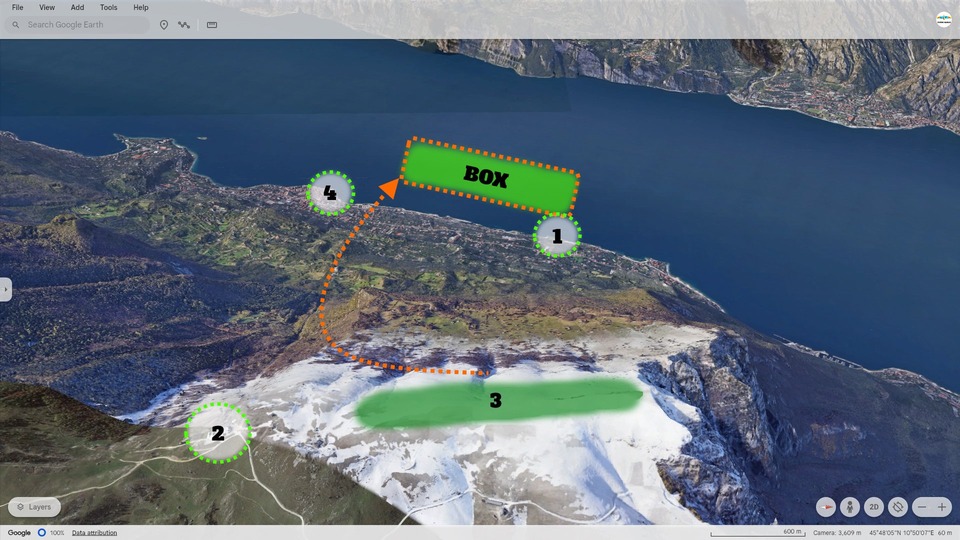
When we have Westerly winds on top, we take-off towards the lake, after take-off we follow the mountain towards South till the Cable car Cables, then we follow those cables towards the Castle or the town - Malcesine. This route tends to be most reliable for optimal arrival in the box above the lake.
NORTH BOX
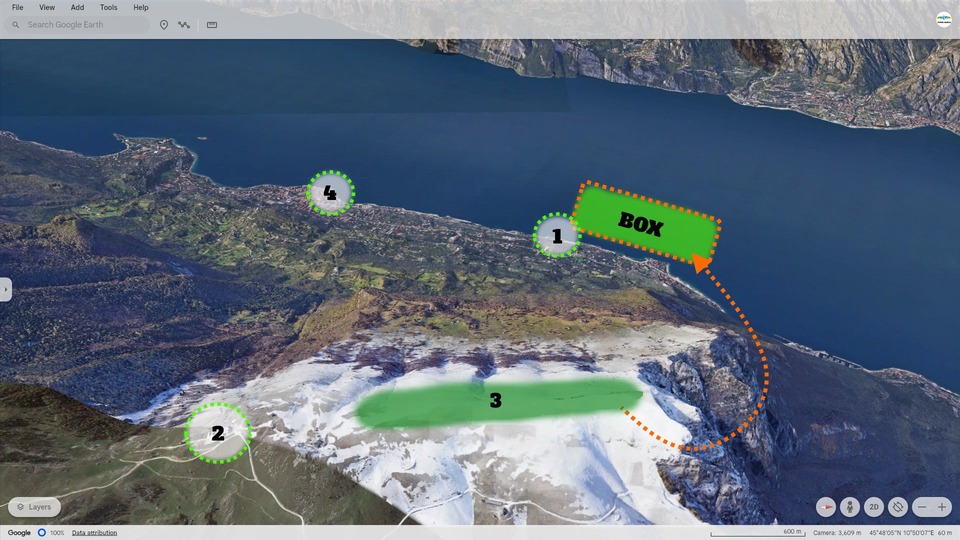
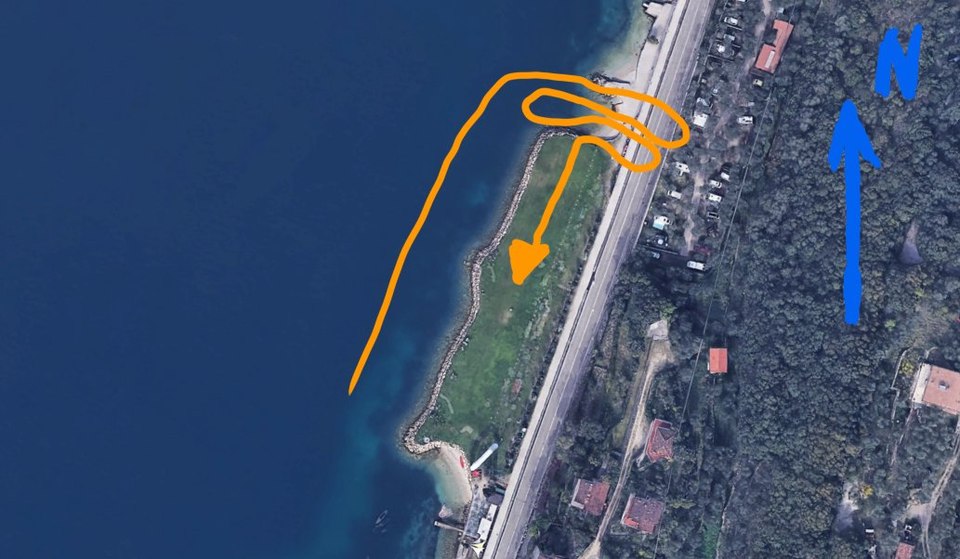
With North winds we will have to take-off towards East, hug the mountain around to head to the lake, roughly following the orange line.
LANDING
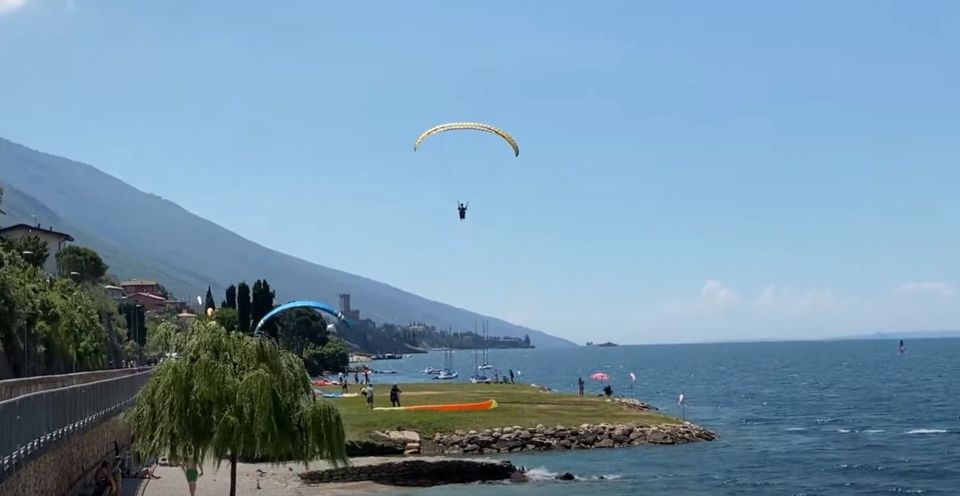
The landing is often windy at Lake Garda, even if the wind is laminar there are a few things you should be paying attention to when coming in for landing here.
All around the landing field towards the water there are large boulders, that you don’t want to have a hard landing on.
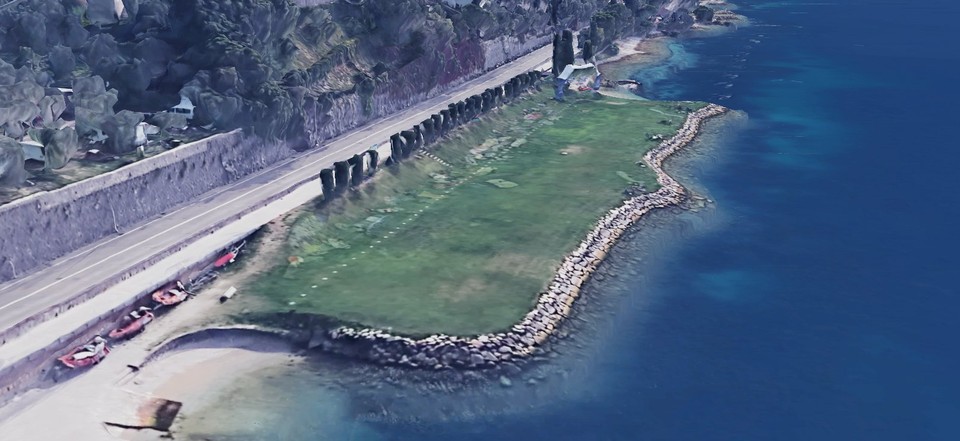
The landing appears quite narrow, but 3 wings can share the approach side by side, not recommended, but possible.
There are multiple wind socks around the landing field that will show you wind directions. There are also quite a few boats that help figuring out wind direction.
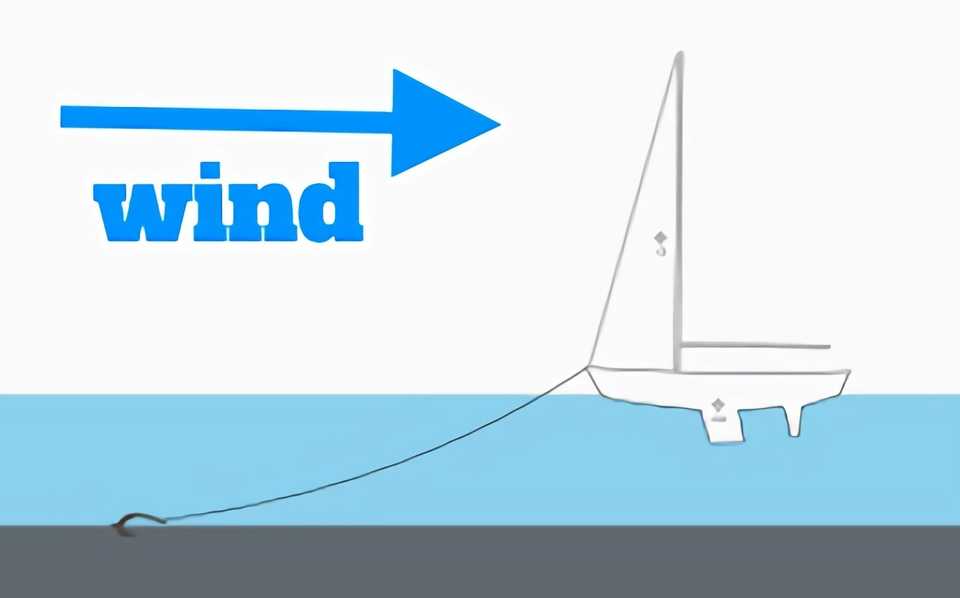
While a boat is anchored down, it will face the wind.
At the landing zone the wind will only be from two directions, from South or North, sometimes the wind will come a bit from the coast, as it hugs around the nearby terrain.
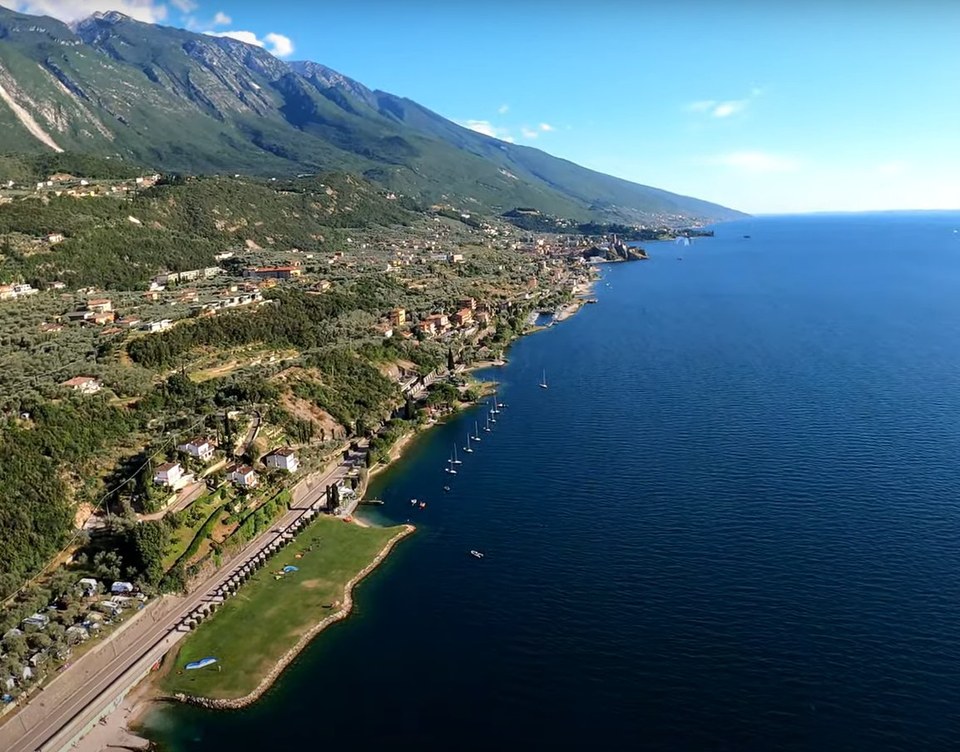
It is important that you leave enough height to have enough time to judge the wind speed and based on that adjust your approach for landing.
In strong winds it is not recommended to do downwind turns low, as you will increase your ground speed drastically and might not turn back in time to make it to the landing zone.
Instead using a crabbing technique, sliding away from landing field and back to it while not moving forwards or backwards. Staying right above it and gradually losing height, tends to work more consistently.
If it is windy enough, sometimes it is enough just to add a bit of brake pressure to lose some height, you can see in the video below, the pilot is actively piloting the wing while losing height vertically. Also notice that as he gets closer to the ground, his sink rate increases, this is quite typical situation to happen here, as you get lower you get some turbulence from nearby obstacles.